
Tuning fork therapy blends ancient sound practices with modern understandings of how vibration affects the body. When activated, a tuning fork produces a stable frequency that travels through air and tissue. These vibrations can interact with the nervous system, which is highly responsive to sound and rhythmic stimulation.
Research into sound‑based therapies is still emerging, but several scientific principles help explain why people often feel calmer and more balanced after a session:
- Entrainment: The body naturally synchronises with external rhythms. Studies on brainwave entrainment show that steady tones can help shift the brain into more relaxed states, supporting reduced stress and improved focus.
- Vagus nerve stimulation: Low‑frequency vibration has been shown in early research to influence vagal activity, which plays a key role in regulating heart rate, digestion, and the body’s relaxation response. While tuning forks haven’t been studied as extensively as medical devices, the underlying mechanism—gentle vibrational input—aligns with this area of research.
- Tension release: Mechanical vibration can help soften muscle tightness and increase local circulation. This is similar to how therapeutic ultrasound or vibration plates work, though tuning forks operate at much gentler intensities.
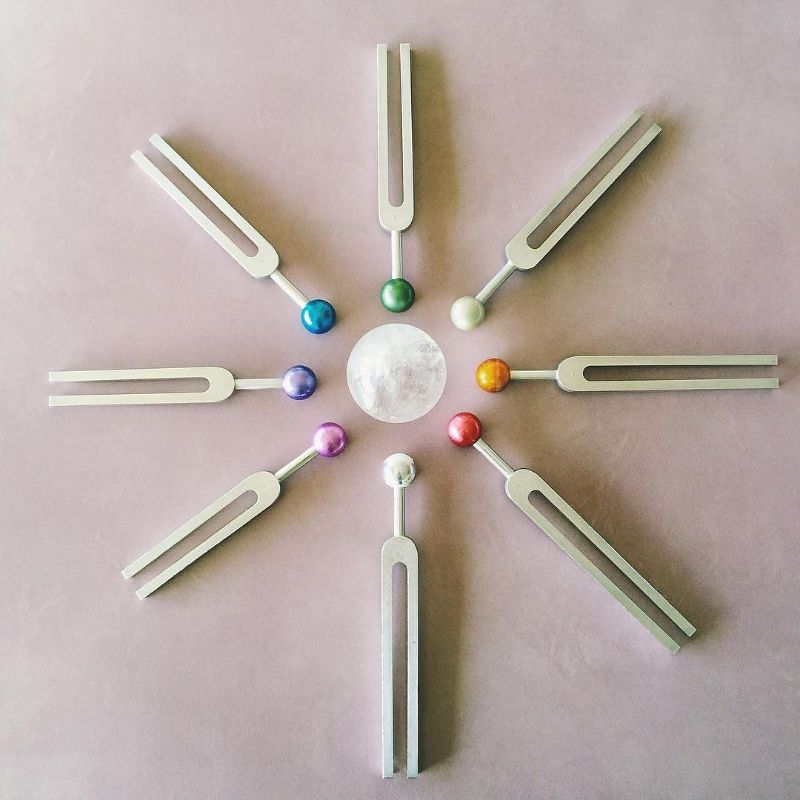
Most importantly, tuning fork therapy is a complementary wellness practice. Its primary strength lies in promoting relaxation, grounding the mind, and creating a sense of internal coherence—conditions that naturally support the body’s own healing processes.
For many people, the combination of soothing sound, focused intention, and vibrational resonance makes tuning forks a simple yet powerful addition to their wellbeing routine.
A session lasts between 30-45 minutes, during which time We will work on the Chakras and clear energy blockages. Focus will then change to specific areas of concern as appropriate.
Please note that Tuning Fork Therapy is not suitable for clients with a pacemaker or during the first trimester of pregnancy.